Replace your tube of toothpaste with!



Powder Toothpaste vs Paste: A Complete Comparison
Explore the differences between powder toothpaste and traditional paste. Compare cleaning effectiveness, ingredients, safety, and daily use to make an informed choice for a cleaner, more conscious oral hygiene routine.
Luigi Cellini
6/3/20265 min read

Prefer to read this article in Spanish?
Read the Spanish version →
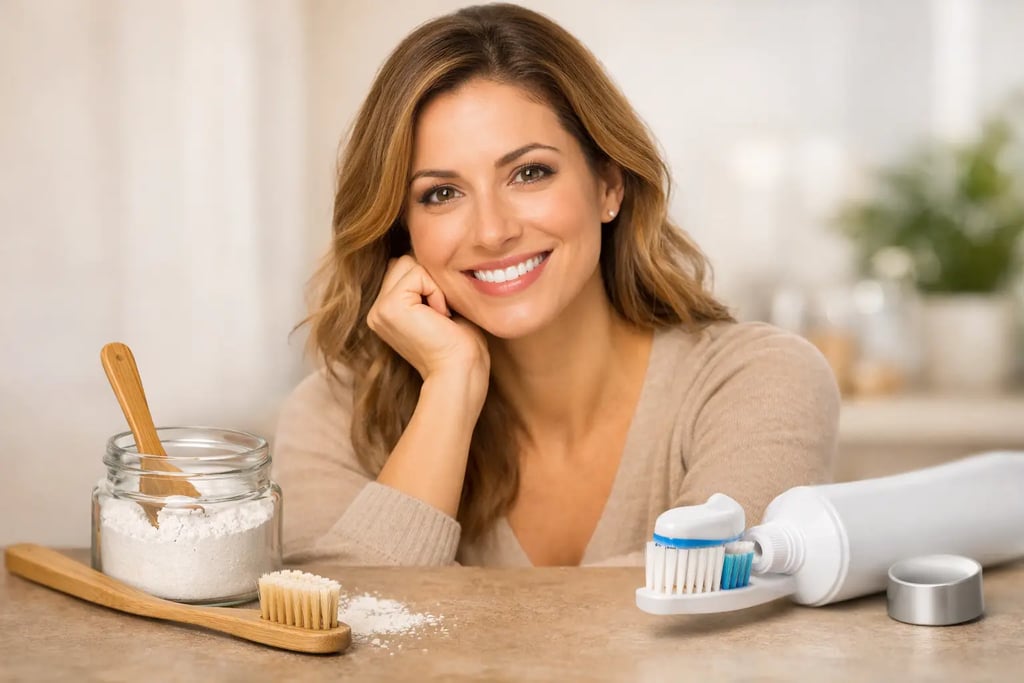
Opening a tube, squeezing out a foamy paste, and taking for granted that this is effective dental hygiene has been the norm for decades. But when you truly ask yourself about tooth powder vs paste, an uncomfortable reality emerges: not all formats clean the same way, not all ingredients respect the mouth, and not everything that looks modern is necessarily better.
The comparison isn't just about texture or habit. It's about what comes into contact with gums, enamel, and mucous membranes two or three times a day. And here, it's worth stopping the repetition of consumer inertia and starting to look at composition, real function, and cumulative effects.
Tooth powder vs paste: the difference isn't just the format
Conventional toothpaste has won through convenience, marketing, and habit. Tooth powder, on the other hand, forces us to re-examine the very basis of oral hygiene: which ingredients are necessary and which are there to make the product more sellable, foamier, or more stable in a tube – even if that doesn't particularly benefit the mouth.
A toothpaste needs water, humectants, thickeners, preservatives, and agents to keep the formula uniform for months. That technical requirement already dictates the ingredient list. Powder doesn't rely on that architecture. It can be formulated in a much simpler, more concentrated, and cleaner way, without loading the product with substances that serve an industrial rather than a biological purpose.
That's why the useful question isn't which format feels more familiar. The right question is which one provides effective cleaning with less unnecessary baggage and better daily tolerance.
Ingredients: where the comparison gets serious
Many conventional toothpastes contain foaming agents, strong fragrances, preservatives, and other additives designed to create a specific sensory experience. The problem is that abundant foam doesn't equal better cleaning. It often just reinforces the feeling of freshness and leads the consumer to believe that more foam means more effectiveness. It doesn't.
The mouth doesn't need a spectacle. It needs balance. And here, a well-formulated tooth powder has an advantage because it can do without the harsh or questionable ingredients that often appear in wet formats. That difference matters especially to people with sensitive mucous membranes, reactive gums, or a clear preference for more biocompatible products.
Then there's the fluoride issue. Some consumers want it, others prefer to avoid it. In an honest article, it must be said clearly: this decision depends on personal criteria, clinical context, and the guidance of the professional each person follows. But for those who want daily fluoride-free hygiene without a long list of hard-to-justify excipients, powder represents a coherent alternative.
Real cleaning: less foam, more useful contact
One of the most widespread mistakes is confusing friction with damage and foam with cleaning. A quality tooth powder doesn't have to be harsh. In fact, it can offer very effective cleaning if the particle size, formulation, and method of use are well designed.
The key lies in how it acts on plaque, debris, and biofilm without damaging enamel or gums. A balanced powder cleans through direct contact, not through sensory cosmetic effects. That action is usually perceived as a truly clean mouth, not just a perfumed one. The difference is noticeable when you run your tongue over your teeth hours after brushing.
That said, not all powders are the same. Here, you need to be discerning. A poorly designed powder can feel rough and uncomfortable. A well-developed one aims for deep cleaning with gentle daily use. On this point, formulas using bicarbonate that has been refined for better tolerance and absorption stand out from more rudimentary options on the market.
Gums, sensitivity, and daily use
Oral hygiene shouldn't become repeated aggression. If a product irritates, dries out, or leaves a burning sensation, it isn't helping in the long term – even if it promises instant whiteness. Many people normalise mild discomfort because they've used the same product for years. That resignation benefits the industry, not oral health.
Tooth powder is often of particular interest to those seeking a gentler, more mindful routine. By eliminating certain common ingredients found in conventional toothpaste, daily exposure to unnecessary substances can be reduced. This doesn't mean every user will notice the same result – because every mouth has its own history, microbiome, and level of sensitivity. But it does mean that the format allows for a cleaner formulation with fewer interferences.
In advanced formulas, the goal isn't just to clean. It's also to support the tooth-gum structure and promote a more balanced mouth. That's the territory where proposals like Blancodent have insisted on a clear idea: replacing the tube not out of artisanal nostalgia, but for a genuine functional improvement.
Whitening and aesthetics: what to reasonably expect
When comparing tooth powder vs paste, people quickly ask about whiteness. That's understandable. Tooth colour is a concern, but here too, there are many inflated promises. Neither powder nor paste will miraculously change the internal shade of enamel in a few days. What they can do is improve surface cleaning and reduce external staining from coffee, tea, wine, or tobacco.
In that sense, a well-formulated powder can offer a visible feeling of greater cleanliness without unnecessary harshness. The advantage lies in removing deposits and polishing intelligently, not in damaging enamel to sell a fake instant whiteness. If a formula promises dazzling results at the cost of sensitivity or wear, be wary.
Aesthetics without health is short-lived. A healthy mouth, with firm gums and clean surfaces, already projects a much more solid visible improvement than any exaggerated cosmetic effect.
Ease of use: toothpaste wins on habit, not always on logic
It would be absurd to deny that toothpaste is convenient – almost everyone grew up with it. The gesture is automatic. Powder requires a small change of habit: wet the brush, take a small amount, adjust the dose. For a few days, it may feel less intuitive.
But once that barrier is overcome, many people discover something interesting: they use less product, control the amount better, and avoid the typical excess of covering the whole brush head with a flashy strip. The problem wasn't the powder. It was the visual habit we were taught.
There's also a practical aspect rarely mentioned. Powder eliminates dependence on the tube, with all that implies for formula preservation and product simplicity. For a consumer who values clean ingredients, that's no small detail.
Which profile suits each option?
Conventional toothpaste may remain the choice for those who prioritise absolute familiarity, strong flavour, and a recognisable foamy experience. If someone doesn't want to change anything about their routine, they'll probably stick with that format.
Tooth powder is a better fit for those who read labels, distrust what's superfluous, and don't want to turn their oral hygiene into a daily cocktail of additives. Also for parents looking for cleaner options for the family, and for adults who want a fluoride-free alternative without foaming agents or harsh ingredients.
That said, an important nuance should be emphasised: changing format doesn't replace proper brushing technique or necessary dental check-ups. A good product adds a lot, but it doesn't compensate for a poor routine.
So, what's better between tooth powder vs paste?
If the comparison is made from habit, toothpaste will win. If it's made from composition, tolerance, and the logic of cleaner oral hygiene, tooth powder has arguments that are very hard to ignore.
Not because it's an alternative trend, but because it questions a category built for years around foam, the tube, and accessory chemistry. And that's uncomfortable. It's uncomfortable for an industry that has turned oral hygiene into an exercise in sensory marketing rather than respect for the mouth.
The final choice depends on what each person is willing to re-evaluate. If you simply want to repeat the familiar, toothpaste fulfils that role. If you want effective cleaning with a simpler, safer, more coherent formula for a preventive approach to oral health, powder stops seeming strange and starts seeming sensible.
Sometimes better oral care isn't about adding more things – it's about removing what never should have been there in the first place.
A more natural smile for a cleaner world.
Information

Contact
Useful links