Replace your tube of toothpaste with!



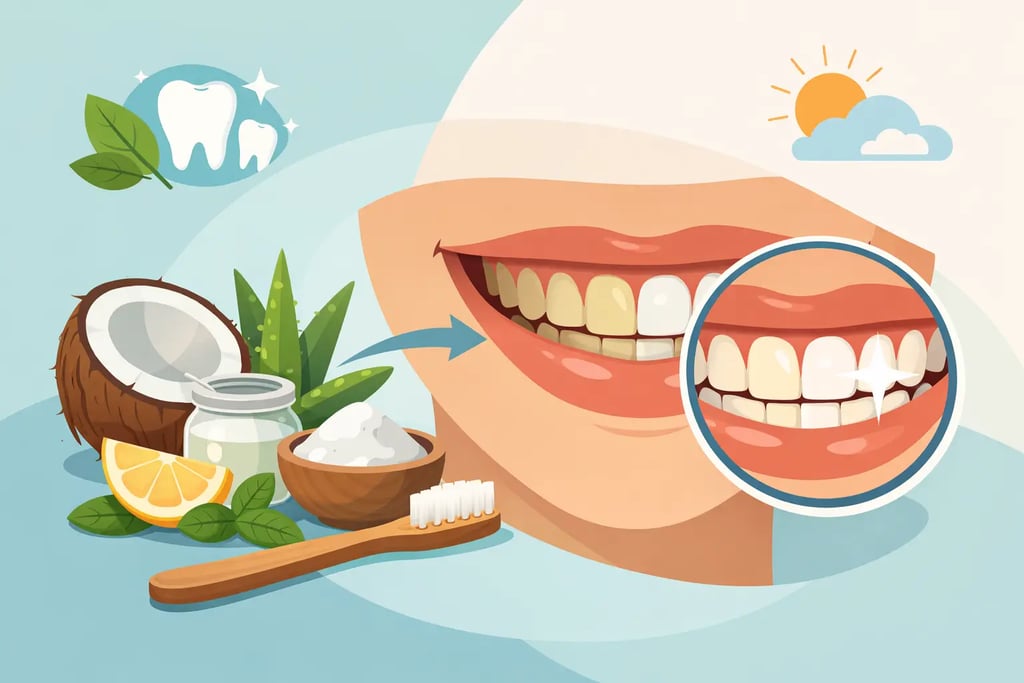
Whiten Teeth Naturally Without Chemicals
Discover how to whiten teeth without chemicals while protecting your enamel. Explore natural teeth whitening methods that promote oral health without harsh ingredients. Learn the importance of pH balance and gentle cleaning for a healthy smile.
BLOG POSTS
Luigi Cellini
5/3/20265 min read
Prefer to read this article in Spanish?
Read the Spanish version →
There's a question that more and more people are asking themselves in front of the mirror, after coffee, tea, or years of using harsh toothpastes: how to whiten teeth without chemicals without damaging enamel along the way. And the uncomfortable answer for the industry is this: not everything that whitens quickly takes care of your mouth, and not everything that foams cleans better.
The conventional model has trained consumers to associate whiteness with controlled aggression. Peroxides, poorly balanced abrasives, intense flavorings, and formulas loaded with questionable ingredients have been sold as normal. But a healthy mouth doesn't need a daily chemical war. It needs real cleaning, pH balance, plaque control, respect for the gums, and a routine that doesn't deteriorate what it's trying to improve.
How to whiten teeth without chemicals realistically
The first thing is to adjust expectations. Whitening without chemicals doesn't mean turning teeth an artificial white in 48 hours. It means removing surface stains, preventing progressive yellowing, and restoring the natural shade of enamel without subjecting it to harsh substances.
That nuance matters. Tooth color depends on several factors: enamel thickness, underlying dentin, age, dietary habits, tobacco, and daily hygiene quality. That's why in some cases a natural routine offers visible improvement within a few weeks, while in others the change is more moderate. If the tooth is internally stained or there is severe wear, no natural solution will work miracles. But for most external stains, there is room for improvement.
The most common mistake: confusing natural with improvised DIY
The internet is full of remedies promising whiteness using lemon, uncontrolled charcoal, vinegar, or abrasive mixtures. They sound natural, but natural isn't synonymous with harmless. Lemon and vinegar are acids. Acid softens enamel. And weakened enamel stains more, not less.
Something similar happens with charcoal. It can help lift pigments in certain formulas, but when used without criteria or with inappropriate particle size, it becomes black sandpaper. The result can be a momentary feeling of cleanliness accompanied by silent wear. In oral hygiene, DIY enthusiasm becomes expensive when there's no technical basis.
The key isn't bleaching; it's cleaning better
When someone searches for how to whiten teeth without chemicals, they usually need three things at once: remove plaque, reduce stains, and protect the tooth and gum structure. That's the decisive point. Visible whiteness doesn't depend only on "whitening," but on removing the film that dulls the tooth's natural luster.
A well-formulated toothpaste, even without harsh whitening agents, can significantly improve the appearance of a smile if it cleans effectively, neutralizes residue, and doesn't leave an unnecessary chemical layer on the mouth. The mouth doesn't need industrial makeup. It needs functional hygiene.
Why foam is not a sign of effectiveness
For decades, consumers have been trained to trust what foams, tingles, or leaves an [extreme feeling of freshness](https://www.blanco-dent.net/dentifrico-sin-fluor-que-mirar-de-verdad). But that sensory experience is marketing, not clinical proof of superior cleaning.
Many foaming ingredients are designed to create a perception of action. The problem is that a formula heavily focused on this effect can be aggressive to sensitive mucous membranes and doesn't necessarily provide better results in natural whiteness. In fact, an irritated, dry, or unbalanced mouth tends to accumulate more problems in the medium term.
What actually works to whiten without aggression
The most solid approach combines cleaning mechanics, well-tolerated mineral ingredients, and consistency. There is no trick. There's physiology.
Proper brushing, two or three times a day, with a gentle and thorough technique, remains the foundation. If brushing is deficient, no natural or conventional product will resolve pigment accumulation. From there, the choice of toothpaste greatly changes the outcome.
Well-designed mineral formulas, especially those working with [high-quality bicarbonate](https://www.blanco-dent.net/beneficios-del-bicarbonato-en-los-dientes) and good absorption, help clean, balance the oral environment, and remove surface stains without entering the logic of aggressive whitening. Formulation matters here, not just the ingredient on the label. A coarse, uncomfortable powder is not the same as a composition optimized for daily use.
The role of well-formulated bicarbonate
Bicarbonate has generated interest for years because it acts on the oral environment in a useful way: it helps modulate acidity, promotes effective cleaning, and helps the tooth surface remain freer of deposits that dull its natural tone. But let's be clear: not just any bicarbonate offers the same experience or the same behavior in the mouth.
When it is absorption-enhanced and designed to be part of a respectful daily hygiene routine, the result changes. The sensation is finer, more effective, and less aggressive than DIY mixes or crude powders. That's where a proposal like Blanco Dent distinguishes itself from [conventional tube toothpaste](https://www.blanco-dent.net/pasta-de-dientes-en-polvo-o-en-tubo) and also from many poorly resolved powders on the market.
Habits that stain and habits that restore clarity
You can't talk about natural whiteness without talking about habits. Coffee, black tea, red wine, tobacco, and certain highly pigmented foods leave their mark. Giving up everything isn't always realistic, but reducing frequency and rinsing your mouth with water after consuming them helps more than it seems.
Something often overlooked also plays a role: brushing too hard. Many people believe that "scrubbing more" whitens more. What it does is wear away. And when enamel loses integrity, yellowish dentin becomes more transparent. That is, excessive force can produce the opposite of the desired effect.
Sleeping with a dry mouth, breathing through the mouth, or maintaining irregular hygiene also worsens visible tooth color. Less saliva means less natural defense against plaque and residue. Whiteness doesn't hold up on an unbalanced mouth.
When to expect results and when to suspect empty promises
If the main cause is surface stains, a well-executed natural routine usually begins to show results between two and six weeks. Not as an artificial flash, but as a progressive improvement: cleaner teeth, less dullness, better overall smile appearance, and a healthier oral feeling.
If someone promises extreme whiteness without biological cost, be suspicious. The question isn't just "does it whiten?" but "at what price?" In oral health, the hidden price can be sensitivity, irritation, wear, or dependence on increasingly intense products to sustain an artificial result.
Signs your routine isn't working
If you notice more sensitivity, frequent bleeding, dryness, rough teeth, or a constant need for stronger products to feel clean, something is wrong. The goal isn't to punish your mouth until it looks white for a few days. The goal is to restore cleanliness compatible with healthy tissues.
That's why truly natural oral hygiene isn't based on adding layers of chemicals, but on removing what's excessive and respecting what protects. It's a different logic. Less artifice, more function.
How to build a daily routine to whiten without chemicals
Start by replacing formulas that rely on harsh agents, unnecessary foaming agents, or ingredients you wouldn't comfortably accept near sensitive mucous membranes. Use a soft brush, spend at least two real minutes brushing, and pay attention to the gum line, where much of the plaque that dulls dental aesthetics accumulates.
Then be consistent. Natural whiteness doesn't appear from a heroic gesture on a Sunday night. It appears when each brushing leaves your mouth cleaner and less exposed to persistent residue. If you also reduce tobacco and pigmented drinks, progress accelerates.
And if you have intense stains, tartar, or doubts about the origin of your tooth color, a professional check-up is advisable. Some color changes come from outside the tooth, others from inside. Knowing the difference prevents frustration and false expectations.
The good news is that caring and beautifying are not opposing goals. You can improve tooth color without subjecting your mouth to a daily chemical routine that normalizes aggression. Choosing a mineral, food-grade, biologically coherent cleaning formula isn't a trend. It's stopping accepting as inevitable a hygiene model that has for too long confused foam with health.
A more natural smile for a cleaner world.
Information

Contact
Useful links