Replace your tube of toothpaste with!



How to Use Powdered Toothpaste Effectively
Discover the correct and hygienic way to use powdered toothpaste for cleaning your teeth and protecting your gums. Learn tips on replacing traditional toothpaste with this innovative alternative.
BLOG POSTS
Luigi Cellini
5/14/20265 min read
Prefer to read this article in Spanish?
Read the Spanish version →
If you're wondering how to use powdered toothpaste, the short answer is this: much easier than you imagine and far more logical than continuing to squeeze a tube loaded with disposable ingredients. The problem isn't the powder format. The problem is that for years we've been led to believe that properly cleaning your teeth requires foam, intense flavors, and industrial formulas that don't always respect the mouth.
Powdered toothpaste is not a oddity or a passing fad. It's a direct, clean, and effective form of daily oral hygiene. Used correctly, it cleans the tooth surface, helps maintain healthier gums, and avoids the excess of harsh agents that abound in many conventional toothpastes. But, as with any truly different product, it's worth knowing how to use it properly from day one.
How to use powdered toothpaste step by step
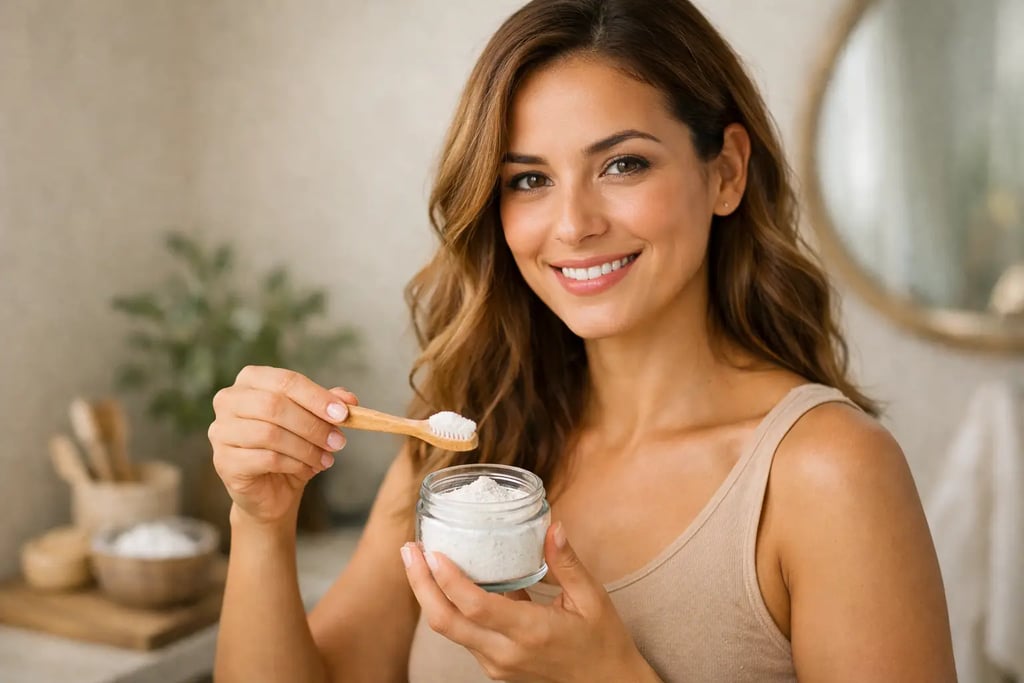
The correct way to use it starts before brushing. The brush should be slightly damp, not soaking wet. If it's dripping, it will pick up more product than necessary and the powder will clump. If it's completely dry, the contact may be less comfortable, especially for those who have been using traditional paste for years.
Once moistened, simply touch the powder surface gently with the tips of the bristles. You don't need to sink the brush into it or load it up like it's compact makeup. A small amount is enough. This surprises many users at first, because we're used to overdosing toothpaste out of pure visual habit.
Then, brush as you normally would, but with one important difference: don't look for foam as a sign of cleanliness. Foam doesn't clean. What cleans is the mechanical action of brushing together with a well-designed formula. Powdered toothpaste acts in a more straightforward, more precise, and in many cases gentler way on oral tissues.
Brushing should last about two minutes, covering all tooth surfaces with controlled movements. If you press too hard, you won't clean better. You'll only damage enamel and gums. The powder format doesn't require extra force; it requires technique.
When you're done, spit out and rinse lightly if you need to. Some people prefer not to rinse excessively to leave the active components in contact with the mouth longer. Others feel more comfortable rinsing with a little water. There's personal flexibility here. What doesn't change is the essentials: small amount, barely damp brush, and consistency.
The most common mistake when using powdered toothpaste
The number one mistake is using too much product. We come from a consumer culture where the long stripe of paste on the brush has been presented as normal, even when it isn't. With powder, less is more. If you cover everything, you're not improving your brushing, you're just wasting product.
The second mistake is judging its effectiveness by sensory experience. Some people think: if it doesn't produce abundant foam, it doesn't clean. That idea benefits the tube industry, not your mouth. Foaming agents have been sold as synonymous with hygiene when they actually serve primarily a cosmetic user-experience function.
The third mistake is wetting the brush inside the jar or carelessly introducing moisture. The container must be kept dry and clean. Powder doesn't need complications, but it does require basic correct handling to maintain its texture and stability.
How much do you really need?
Very little. That's one of the great advantages of the format. A light coating on the bristles is enough for effective cleaning. If it seems too little at first, that's normal. Your eye is trained by conventional paste, which has turned excess into routine.
With daily use, most people adjust the amount within a few days. They learn to identify the useful dose and stop confusing spectacle with results. When a formula is well thought out, it doesn't need gimmicks to work.
How to maintain hygienic use
Hygiene in use depends on simple details. Ideally, the brush should touch the powder only with clean, barely damp bristles. If several people share a bathroom, the sensible approach is for each person to have their own container or to use a small dry spoon to deposit a pinch into another container or into a clean hand.
There's no need for drama, but common sense should prevail. Closing the container properly after each use, avoiding water ingress, and storing it in a dry place keeps the product in good condition. The advantage of powder is precisely its simplicity. And simplicity, when well cared for, lasts.
What it feels like to switch from traditional paste
The first few uses may be surprising. The taste is usually cleaner and less invasive. The feeling in the mouth is different, because there's no artificial foamy layer wrapping around everything. Some users interpret this as a lack of power. In reality, it's often the opposite: you finally experience oral hygiene without chemical makeup.
Your perception of brushing may also change. With less foam, you pay more attention to how you brush and less to the immediate sensory impact. That improves your technique. And improving technique is worth more than any advertising promise.
That said, not all powdered toothpastes are the same. Here's a key difference that many brands prefer to blur. There are powders that are too abrasive, poorly balanced, or formulated without any real logic for daily use. That's why the quality of the formula matters, not just the format. A well-developed powdered toothpaste should clean without punishing, support tooth and gum structure, and truly replace tube paste, not remain a shelf experiment.
How to use powdered toothpaste if you have sensitive gums
In this case, gentleness matters even more. Use a soft-bristled brush, a minimal amount of product, and delicate movements at the gum margin. Don't scrub as if you were polishing a tile. Inflamed or reactive gums don't need aggression; they need consistent, respectful hygiene.
Here, an honest distinction should be made. If the sensitivity comes from a harsh brushing technique, switching products may help, but it won't solve the problem on its own. If there is persistent bleeding, pain, or gum recession, it's time to review habits and seek professional evaluation. Well-designed natural hygiene adds a lot, but it doesn't replace clinical judgment when pathology is present.
What about children or those seeking a cleaner formula?
For many adults, and also for families wanting to reduce daily exposure to questionable ingredients, powder has an obvious advantage: it allows for a simpler and more transparent formulation. Without the need for foaming agents, antibiotics, anesthetics, or other harsh additives, the daily routine gains coherence.
That doesn't mean any powder works for anyone. For young children or people with specific needs, the key remains choosing a gentle, safe formula designed for frequent use. When that formula also prioritizes biocompatible components and avoids unnecessary toxins, the change ceases to be aesthetic and becomes a daily health decision.
In this area, proposals like Blancodent have driven a necessary break: stopping assuming that conventional is automatically best. Their commitment to sublimated bicarbonate points precisely to that underlying idea—that it's not enough to remove problematic ingredients; you have to build a superior alternative in terms of absorption, tolerance, and tooth-and-gum support.
What changes when you truly replace tube toothpaste
More changes than you might think. Your relationship with quantity changes—you use less. Your relationship with cleaning changes—you stop associating it with foam and perfume. And your judgment as a consumer changes—you start looking at ingredients and function instead of accepting market inertia.
Tube toothpaste has dominated for decades not only because of effectiveness, but because of habit, distribution, and marketing. Powdered toothpaste forces an uncomfortable question: if a simpler, cleaner, more respectful alternative works, why do we keep accepting formulas full of questionable elements? The answer usually isn't about oral health, but about industry.
That's why learning how to use powdered toothpaste is not just about learning a technique. It's about unlearning a routine built by interests outside your well-being. At first, it requires a small mental adjustment. Afterwards, everything falls into place with a logic that's hard to ignore.
If you're going to make the switch, do it without half-measures: use a small amount, brush gently, observe how your mouth responds, and give yourself a few days to come off autopilot. Sometimes the revolution starts with a small gesture in front of the mirror.
A more natural smile for a cleaner world.
Information

Contact
Useful links